
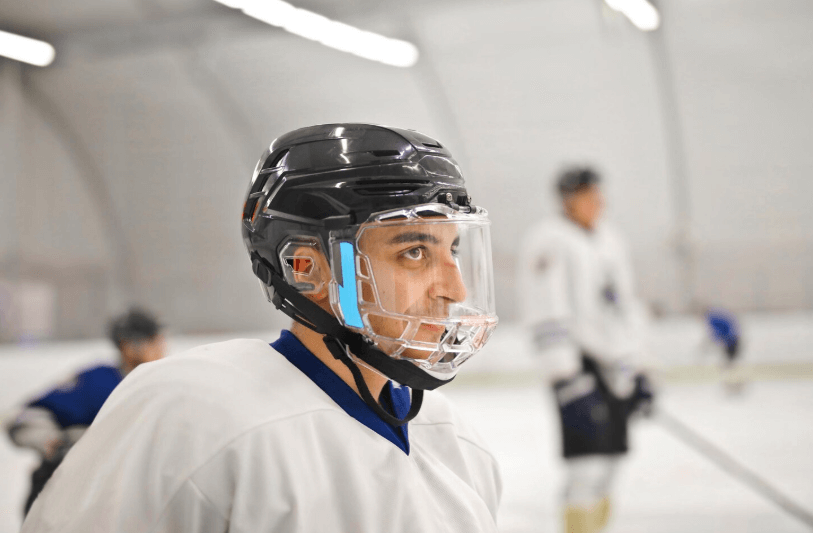
Hockey demands explosive power, rapid directional changes, and a skating stride that places unique stress on the hip and groin region. These demands create a predictable injury pattern that affects hockey players at all levels, from youth leagues to professional teams. Groin strains account for approximately 10 to 15 percent of all hockey injuries and are among the most frustrating problems players face due to their tendency to become chronic and recurrent. The underlying issue often isn’t weakness alone but rather limited hip mobility combined with muscle imbalances that the skating motion reinforces. Understanding this connection and addressing it proactively can dramatically reduce injury risk and improve on-ice performance.
Why Hockey Players Get Groin Strains
The skating stride requires powerful hip adduction, the movement that brings your leg back toward your body’s midline after pushing off. Your adductor muscles, commonly called the groin muscles, perform this action hundreds or thousands of times during practices and games. This repetitive demand creates enormous stress on these muscles and their tendon attachments.
Several factors make hockey players particularly vulnerable to groin strains. The skating position keeps hips in a flexed and slightly externally rotated position for extended periods, which can tighten hip flexors and limit hip extension. Explosive starts, stops, and directional changes require sudden maximum contractions of the adductors. Contact and collisions force legs into extreme positions that exceed normal range of motion. Equipment weight and restriction can alter movement patterns and increase muscle fatigue.
The groin strain itself typically occurs when the adductor muscle or tendon is stretched beyond its capacity, often during a skating stride where the leg extends further than usual or when a player attempts to change direction rapidly. However, the injury rarely happens to a healthy, well-conditioned muscle. It almost always occurs when underlying risk factors have been building over weeks or months.
The Hip Mobility Connection
Limited hip mobility is the single strongest predictor of groin injury risk in hockey players. When your hips can’t move through their full range of motion, your body compensates by asking other structures to work harder or move further than they should. This compensation eventually breaks down, usually in the form of a groin strain.
Hockey players commonly develop tightness in hip flexors from the constant skating position, limited hip internal rotation from the externally rotated skating stance, restricted hip extension because the skating stride never takes the hip into full extension, and tight hip adductors from their repetitive overuse. These limitations create a situation where the muscles are both tight and weak, constantly working in a shortened range that prevents them from developing strength through full motion.
When a play requires movement beyond this limited range, such as a wide skating stride to avoid a check or an unexpected split during a collision, the tissues can’t handle the demand. The result is a strain that can sideline a player for weeks or months, and often recurs because the underlying mobility limitation was never addressed.
Assessing Your Hip Mobility
Several simple tests can help identify hip mobility limitations before they cause injury. The hip flexor length test involves lying on your back at the edge of a table or bed, pulling one knee to your chest while letting the other leg hang down. If the hanging leg doesn’t stay down flat or the knee won’t straighten, you have hip flexor tightness.
For hip internal rotation, sit with your knee bent at 90 degrees and rotate your lower leg outward, which internally rotates your hip. You should achieve at least 30 to 40 degrees of motion. Limited internal rotation is extremely common in hockey players and strongly predicts groin injury risk. The butterfly stretch assesses adductor flexibility by sitting with the soles of your feet together and gently pressing your knees toward the floor. Significant resistance or inability to get knees reasonably close to the floor indicates tightness.
The hip extension test can be done standing by taking a large step backward into a lunge position. Your back hip should be able to extend with your body upright. If you must lean forward or arch your back excessively, you lack hip extension mobility. If any of these tests reveal significant limitations, addressing them should be a priority before they contribute to injury.
Building Groin Strength and Resilience
While mobility is crucial, strength is equally important for preventing groin strains. The adductor muscles need sufficient strength to handle the forces of skating, adequate endurance to maintain that strength throughout a game, and balance with opposing muscle groups like the hip abductors.
Effective groin strengthening exercises include Copenhagen adductor planks, where you support your body in a side plank with your top leg elevated on a bench, creating intense adductor demand. Lateral skater lunges build strength through a skating-specific movement pattern. Resistance band adduction exercises directly strengthen the adductors through their full range of motion. Ball squeezes, while less functional, help build isometric strength and can be done easily as part of a warm-up.
The key is progressive loading over time. Start with exercises you can control perfectly and gradually increase difficulty, resistance, or duration. Groin strengthening should be performed 2 to 3 times per week during the off-season and at least once per week during the season for maintenance.
The Role of Hip Abductor Strength
While groin strains involve the adductors, the opposing hip abductor muscles play a critical role in injury prevention. When abductors are weak, adductors must work harder to stabilize the pelvis during skating. This constant extra demand fatigues the adductors and increases strain risk.
Hip abductor exercises include lateral band walks, single-leg balance exercises, side-lying leg raises, and single-leg squats or deadlifts. Building balanced hip strength where both adductors and abductors are strong relative to each other creates a stable pelvis that can handle the demands of skating without overloading any single muscle group.
Dynamic Warm-Up for Groin Protection
A proper warm-up is essential for preparing the groin and hip complex for the explosive demands of hockey. Static stretching before activity is less effective and may actually increase injury risk. Instead, focus on dynamic movements that progressively increase range of motion and activate key muscle groups.
An effective hockey warm-up includes light cardiovascular activity for 5 minutes to increase body temperature, dynamic hip mobility exercises like leg swings, walking lunges with rotation, and lateral shuffles. Include groin-specific activation with gentle resistance band work and progressive skating movements starting at low intensity.
The warm-up should last at least 10 to 15 minutes and leave you feeling loose, warm, and ready for intense activity. Rushing through a brief, inadequate warm-up to get more ice time is a false economy when it increases your injury risk.
Managing Training Load During the Season
Groin strains often occur when accumulated fatigue exceeds the body’s recovery capacity. During intense parts of the season with multiple games per week, your groin muscles may never fully recover before the next demand. This progressive fatigue reduces the force needed to cause injury.
Smart load management includes monitoring total ice time including practices and games, ensuring at least one complete rest day per week, recognizing that goalies have different demands than skaters, and paying attention to early warning signs like groin tightness or fatigue that doesn’t resolve overnight.
Off-ice training during the season should complement rather than compete with on-ice demands. Reduce training volume during heavy game schedules and increase it during lighter periods. The goal is consistent moderate stress rather than cycles of extreme overload followed by complete rest.
Treating Minor Groin Discomfort Before It Becomes Major
Many serious groin strains start as minor discomfort that players ignore or play through. Recognizing early warning signs and addressing them immediately can prevent progression to significant injury. Warning signs include tightness or discomfort in the groin during skating, pain with explosive starts or directional changes, soreness that persists into the next day, and reduced power or stride length on one side.
When you notice these signs, reduce training intensity for several days, increase attention to mobility and recovery work, apply ice after activity to manage inflammation, and consider consultation with a physical therapist before symptoms progress. Two or three days of modified activity and focused recovery often resolves minor issues that would become major problems if ignored.
The Chronic Groin Strain Problem
Groin strains have a frustrating tendency to become chronic or recurrent. Studies show that up to 20 percent of groin strains don’t fully heal and players return to play with persistent symptoms. This happens when the initial injury isn’t given adequate recovery time, underlying mobility and strength issues aren’t addressed, scar tissue develops that limits normal muscle function, and compensation patterns develop that stress the healing tissue.
Preventing chronic groin problems requires complete rehabilitation of acute strains, not just returning when pain decreases. This means restoring full hip mobility, rebuilding strength through the complete range of motion, correcting any biomechanical issues or imbalances, and following a graduated return to play protocol. Rushing back before complete healing is the primary cause of chronic groin problems.
Off-Season Hip and Groin Preparation
The off-season is the ideal time for comprehensive hip and groin preparation that will protect you throughout the coming season. This period allows time for addressing mobility limitations without competition demands, building strength systematically through progressive loading, and correcting movement patterns and imbalances.
A complete off-season program includes daily hip mobility work focusing on all planes of motion, 2 to 3 days per week of targeted strength training for hip and core, skating-specific exercises that prepare you for the demands ahead, and gradual progression from general preparation to sport-specific training. Players who invest in off-season preparation consistently have fewer in-season injuries and better performance.
Professional Assessment and Treatment
Hip mobility limitations and strength imbalances are difficult to assess and address on your own. Many players don’t recognize their own restrictions until a physical therapist evaluates them and reveals significant deficits. Professional assessment provides objective measurement of your mobility and strength, identifies specific risk factors for your individual mechanics, and creates targeted interventions for your needs.
The sports physical therapy specialists at Pro+Kinetix Physical Therapy & Performance in Oakland, Des Moines, San Diego work extensively with hockey players to prevent and treat groin strains and hip problems. We provide comprehensive hip and groin assessments that identify injury risk, create sport-specific mobility and strengthening programs, treat acute groin strains with evidence-based techniques, and design return-to-play protocols that prevent recurrence.
Don’t wait for a groin strain to sideline your season. Call us today at (510) 338-7283 for Oakland office, (515) 985-2997 for Des Moines office and (619) 354-7036 for San Diego office to schedule your hockey injury prevention assessment. Our physical therapists will evaluate your hip mobility and groin strength, identify specific risk factors for injury, create a personalized prevention program for hockey demands, and help you stay on the ice performing at your best throughout the entire season!


